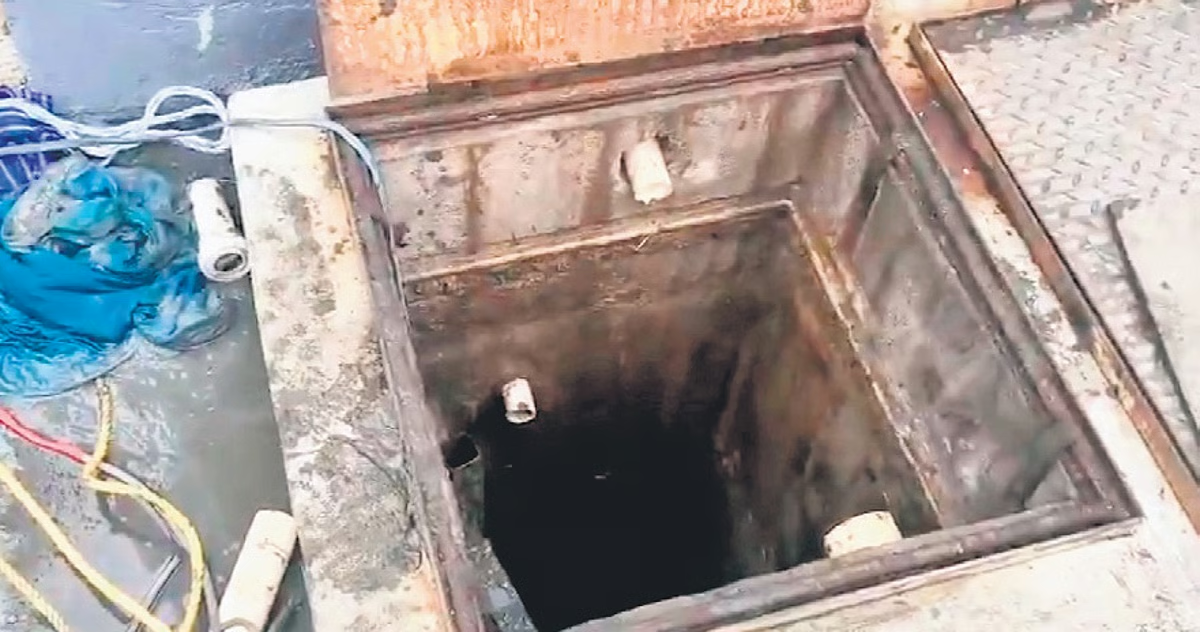
Three sanitation workers lose their lives at Dinesh Auric Apartments in Bachupally, raising serious concerns over worker safety, hazardous septic tank cleaning and compliance with mandatory safety regulations.
Hyderabad, Bachupally: In a tragic incident, three young sanitation workers died after allegedly inhaling toxic gases while cleaning a septic tank at Dinesh Auric Apartments, a gated residential complex in Bachupally, on Tuesday.
The incident has raised serious questions about the safety measures adopted during septic tank cleaning operations at residential communities and the responsibilities of contractors and apartment managements.
Three Workers Lose Their Lives
According to preliminary police findings, one of the workers reportedly developed breathing difficulties after entering the septic tank.
The other two entered the tank in an attempt to rescue him but were also overcome by suspected toxic fumes.
All three workers lost their lives.
The deceased were identified as:
- K. Shanmukh Rao (24)
- Suresh (25)
- Yella Pawan (25)
The three workers hailed from Kotabommali in Srikakulam district of Andhra Pradesh. They had reportedly been living in Hyderabad for the past 10 years, earning their livelihood through septic tank cleaning work.
After receiving information about the incident, Bachupally police reached the apartment complex, retrieved the bodies and shifted them to Gandhi Hospital for postmortem examination.
Contractor Arrested, Apartment Management Under Examination
Bachupally police arrested the contractor, identified as Pallalappa DC Ravi (33), a native of Bengaluru residing at Chitrapuri Colony.
A case was registered under provisions of the Bharatiya Nyaya Sanhita (BNS) relating to negligence and endangering the personal safety of others.
Bachupally Inspector P. Dali Naidu said preliminary findings indicated that toxic gases accumulated inside the septic tank may have caused the workers to suffocate. The exact cause of death will be established through postmortem reports and further investigation.
Police are examining whether adequate protective equipment was provided, whether gas levels were tested before the workers entered the tank and whether mandatory safety procedures were followed.
The role of the apartment management in permitting the cleaning operations is also under examination. Responsibility for the incident is yet to be established through the investigation.
Tension at Dinesh Auric Apartments
Tension prevailed at the residential complex after family members of the deceased workers arrived at the premises.
The families alleged that the bodies had been shifted to Gandhi Hospital without informing them and that security personnel prevented them from entering the apartment complex.
Heated arguments reportedly broke out between the families, residents and security personnel. A minor scuffle was also reported before the situation was brought under control.
Telangana Human Rights Commission Seeks Answers
Taking suo motu cognisance of the tragic deaths, the Telangana Human Rights Commission (TGHRC), headed by Dr Justice Shameem Akther, has sought detailed reports from the Secretary to Government, Municipal Administration and Urban Development Department.
The commission has also directed the Medchal–Malkajgiri district administration to submit a report covering:
- Circumstances leading to the deaths of the three workers.
- Details of the inquiry and coordination between government departments.
- Ex-gratia compensation extended or proposed to the bereaved families.
- Other assistance provided or proposed for the victims’ families.
The commission has directed the authorities to submit their reports by December 22, 2026.
What Does the Prohibition of Employment as Manual Scavengers Act Say?
The Prohibition of Employment as Manual Scavengers and their Rehabilitation Act, 2013, is a central legislation enacted to eliminate manual scavenging and prohibit hazardous cleaning of sewers and septic tanks.
Section 7 of the Act prohibits individuals, local authorities and agencies from engaging any person, directly or indirectly, in hazardous cleaning of sewers or septic tanks.
The legislation and associated rules emphasise mechanised cleaning, appropriate protective equipment and prescribed safety precautions.
Violations of the prohibition can attract imprisonment, fines or both.
The Act places significant responsibility on those engaging sanitation workers to ensure that cleaning operations are carried out safely and in accordance with applicable regulations.
A Wake-Up Call for Gated Communities in Bachupally and Hyderabad
The tragedy at Dinesh Auric Apartments serves as a serious reminder to apartment associations, gated communities, facility management companies and sanitation contractors across Hyderabad.
Residential communities must ensure that septic tank and sewer cleaning operations are undertaken using appropriate mechanised equipment and by qualified service providers following prescribed safety procedures.
Apartment associations should verify contractor credentials, safety arrangements, gas detection equipment, emergency preparedness and compliance with applicable laws before authorising such work.
Untrained individuals should never enter a septic tank, including during an attempted rescue. Such emergencies require trained rescue personnel and specialised equipment.
Routine maintenance should never come at the cost of human life.
Three Lives Lost — Could This Tragedy Have Been Prevented?
Three young workers who left their hometown in search of a livelihood have lost their lives while performing an essential sanitation service.
Their deaths highlight the urgent need for stronger enforcement of safety regulations, greater accountability among contractors and residential managements, and improved protection for sanitation workers.
As the police investigation continues and the Telangana Human Rights Commission awaits reports from the concerned authorities, the bereaved families are seeking answers, accountability and appropriate assistance.
The Bachupally septic tank tragedy must serve as a reminder that the safety and dignity of sanitation workers are non-negotiable.
No maintenance work is worth a human life.