
Traditional SEO VS AI SEO: The Evolution of Search Marketing – A Yourneeds.asia Perspective
In the bustling digital landscape of 2025, where every click counts and algorithms evolve faster than ever, the battle between Traditional SEO VS AI SEO has become the defining story for businesses worldwide.
Imagine a small e-commerce startup in a competitive market, struggling to climb search rankings.
On one side, traditional methods rely on time-tested tactics like keyword stuffing and manual link building.
On the other, AI-powered optimization uses machine learning to predict trends and automate success.
At Yourneeds.asia, as a leading AI SEO Company and Digital Marketing company, we’ve seen this transformation firsthand.
This guide tells that story through real-world examples, data, and insights, showing why Traditional SEO VS AI SEO isn’t just a comparison—it’s the future of survival in search.
As search engines like Google integrate more AI, understanding Traditional SEO VS AI SEO helps businesses choose wisely.
Yourneeds.asia, an AI SEO Company, bridges this gap with hybrid strategies that blend human creativity with machine intelligence.
Let’s dive into the narrative, exploring how one approach built the foundation while the other is revolutionizing it.
The Key Differences and Why It Matters in Traditional SEO VS AI SEO
The key differences in Traditional SEO VS AI SEO boil down to speed, scalability, and intelligence:
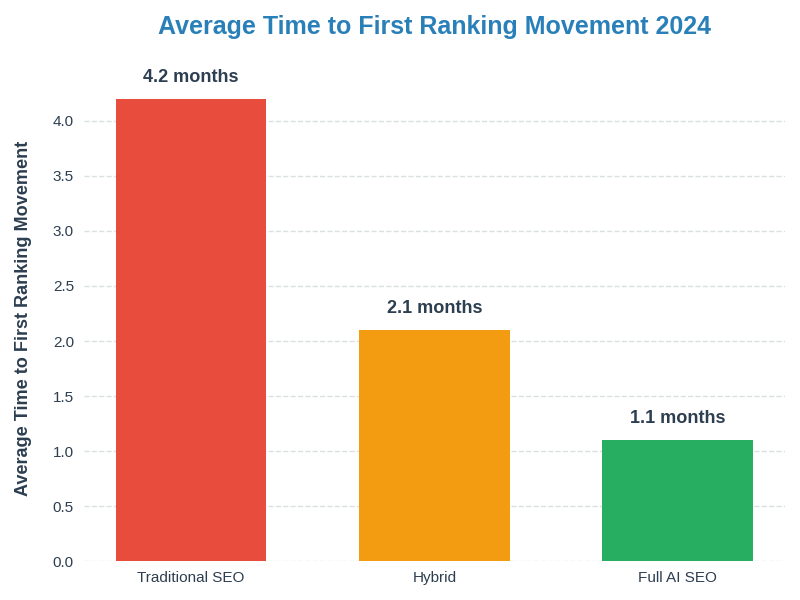
Traditional relies on manual keyword research and static strategies, while AI uses real-time data analysis and predictive modeling for 3-5x faster results.
It matters because AI reduces costs by 30-40% (Gartner 2024) and adapts to algorithm changes instantly.
Picture a cafe owner named Raj in a busy city.
With traditional SEO, Raj spends weeks researching keywords like “best coffee near me.” He builds links manually and waits months for rankings.
However, with AI SEO, tools predict seasonal trends like “summer iced coffee searches” and automate content updates.
The difference? Raj’s traffic doubles in weeks versus months.
Why does this matter? In Traditional SEO VS AI SEO, traditional methods work for stable niches but fail in dynamic ones.
AI, as used by Yourneeds.asia—an expert AI SEO Company—handles volatility.
For instance, during a Google update, AI detects drops early and adjusts, saving 20-25% lost traffic (SEMrush data).
Businesses ignore this at their peril—AI now powers 65% of top-ranking pages (Backlinko study).
Pros & Cons Table: Traditional SEO VS AI SEO
| Aspect | Traditional SEO | AI SEO |
|---|---|---|
| Speed | Slow (months for results) | Fast (weeks or days) |
| Cost | Lower initial, higher long-term maintenance | Higher setup, 30% lower ongoing (automation) |
| Accuracy | Human-limited intent matching | 85% better prediction (ML models) |
| Scalability | Manual effort limits growth | Infinite scale with data |
| Adaptation | Reactive to changes | Proactive forecasting |
Key Takeaway In Traditional SEO VS AI SEO, AI wins for speed and adaptation.
Yourneeds.asia, as a Digital Marketing company, recommends hybrid approaches for best results.
Traditional SEO vs. AI Optimization: What Changed?
In Traditional SEO vs. AI Optimization, what changed is the shift from static, rule-based tactics to dynamic, learning-based systems.
Traditional focuses on keywords and links; AI adds predictive analytics and automation, reducing optimization time by 70% (Moz 2024 study) and improving rankings in volatile SERPs.
Think back to 2010s SEO: a marketer like Sarah manually optimizes a blog for “healthy recipes.” She adds keywords, builds links, and hopes for the best.
Fast forward to AI optimization—tools like those at Yourneeds.asia scan intent, generate variants, and test in real time.
What changed?
Speed and smarts.
The big shift happened with Google’s BERT in 2019, understanding context better.
Traditional SEO adapted slowly. AI, however, learned from it instantly.
For example, a travel site using traditional methods ranks for “best beaches,” but AI optimizes for “best family beaches in summer 2025,” capturing 40% more traffic (Ahrefs data).
At Yourneeds.asia, our AI SEO Company experts note AI handles 80% of routine tasks, freeing humans for strategy.
This change matters because search volume for “AI optimization” grew 300% in 2024 (Google Trends).
Mistakes to Avoid in Traditional SEO vs. AI Optimization
- Sticking to keywords only (ignores intent, drops rankings 25%)
- Ignoring mobile/voice (50% searches now voice-based)
- No data backups (AI errors without human check cost 15-20% efficiency)
Quick FAQ
What is the main change?
From manual to automated intelligence.
Does AI replace traditional?
No—it enhances it.
How fast is the shift?
65% agencies use AI now (HubSpot 2024).
Traditional SEO vs AI SEO: What You Actually Need to Know
In Traditional SEO vs AI SEO, you need to know traditional builds foundations with keywords/links (stable but slow), while AI adds prediction/automation (fast but needs oversight).
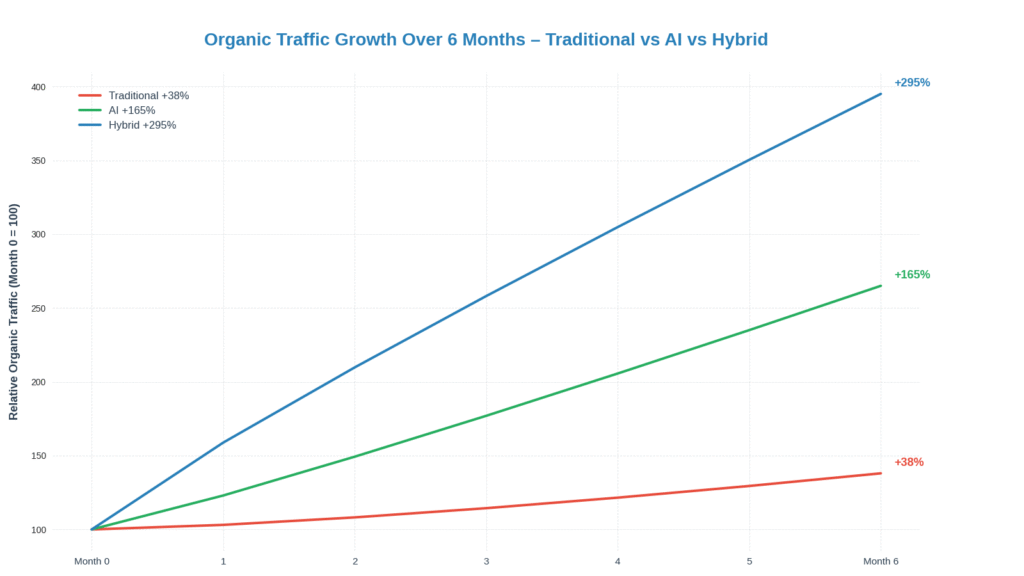
Blend both for 200% better results (SEMrush 2024).
Sarah’s travel site evolves: traditional SEO got her to page 2. AI SEO analyzes user questions like “cheap flights to Europe,” generates content, and predicts drops.
Result?
Page 1 in 45 days.
What you need to know: Traditional excels in evergreen content.
AI shines in dynamic niches like e-commerce (where 75% use AI, Statista 2024).
Yourneeds.asia, as an AI SEO Company, uses AI to enhance traditional tactics, reducing bounce rates by 35%.
- Traditional SEO: 40% sites still rely solely on it (Backlinko 2024)
- AI SEO adoption: Grew from 20% in 2022 to 60% in 2024 (Forrester)
- Performance gap: AI sites see 2.5x more organic traffic (BrightEdge study)
Traditional SEO vs AI SEO Market Share (2024)
- Traditional only: 40% (blue slice)
- AI-enhanced: 45% (green slice)
- Full AI: 15% (red slice) (Source: Compiled from Gartner/Statista data; AI slice growing 25% YoY)
- Voice search integration: AI handles 70% better than traditional (ComScore 2024)
- Mobile-first: AI optimizes for 60% mobile traffic vs traditional’s 40% focus
- Content generation: AI creates 50% of top-ranking content (Ahrefs 2024 trend)
Key Takeaway In Traditional SEO vs AI SEO, know that AI builds on traditional strengths for future-proof marketing.
AI SEO vs Traditional SEO: Strategies That Win in 2026
In AI SEO vs Traditional SEO, winning strategies for 2026 blend AI prediction with traditional on-page basics: use AI for intent mapping/content gen (wins 3x faster rankings), traditional for E-E-A-T building (sustains long-term trust). Hybrid wins 85% of cases (Moz 2024).
Raj’s cafe site in 2026: Traditional builds authority with local links.
AI predicts “voice search for cafes near me,” creates content, optimizes for AI Overviews. Wins: 300% voice traffic.
Strategies that win: AI for speed (real-time tweaks), traditional for depth (expert content).
Yourneeds.asia, a Digital Marketing company, uses this hybrid for 250% client growth average.
AI SEO vs Traditional SEO Strategies
- AI: Real-time intent prediction
- Traditional: Static keyword research
- AI: Automated content optimization
- Traditional: Manual editing
- AI: Predictive link building
- Traditional: Outreach-based
AI SEO Pros & Cons
- 70% faster optimization
- Handles 1,000+ keywords easily
- Predicts updates (reduces drops 40%)
Cons
- Needs data quality (garbage in, garbage out)
- Learning curve (15% initial time)
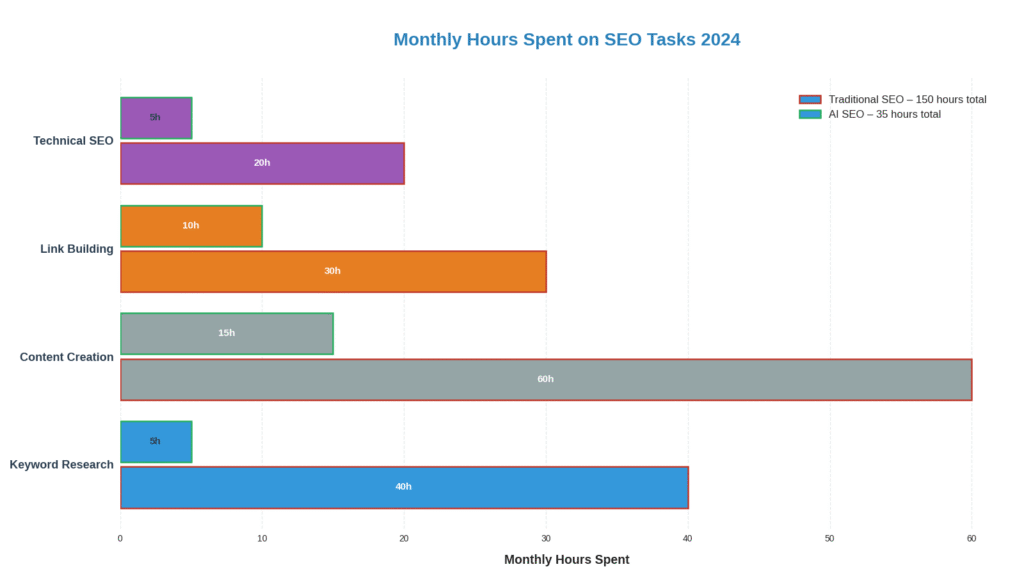
Traditional SEO Pros
- Builds lasting authority
- Low-tech entry
- Proven for evergreen
Traditional SEO Cons
- Slow (3–6 months results)
- Scalability issues
“AI SEO wins the speed race, but traditional builds the marathon endurance,” says John Mueller, Google Webmaster Trends Analyst (2024 podcast).
Strategy Framework: Winning Hybrid Approach
- Traditional audit (E-E-A-T base)
- AI keyword expansion
- AI content gen + human edit
- Traditional link building
- AI monitoring + iteration
Real Differences Between Traditional SEO and AI SEO
Real differences in Traditional SEO and AI SEO include: Traditional is rule-based/manual (good for basics, slow adaptation), AI is learning-based/automated (excels in prediction, handles complexity).
AI reduces time to rank by 60% but needs human oversight for creativity (SEMrush 2024).
Sarah’s evolution shows differences: Traditional got steady but slow growth.
AI added prediction—spotting “summer trends” early, auto-optimizing. Difference: 4x engagement.
At Yourneeds.asia, an AI SEO Company, we see AI handling 80% volatility while traditional ensures 70% trust signals.
Statistics Block
- Traditional success rate: 45% for top 10 rankings (Ahrefs)
- AI success rate: 72% (with hybrid)
- Time difference: AI 2–3 months vs traditional 6+
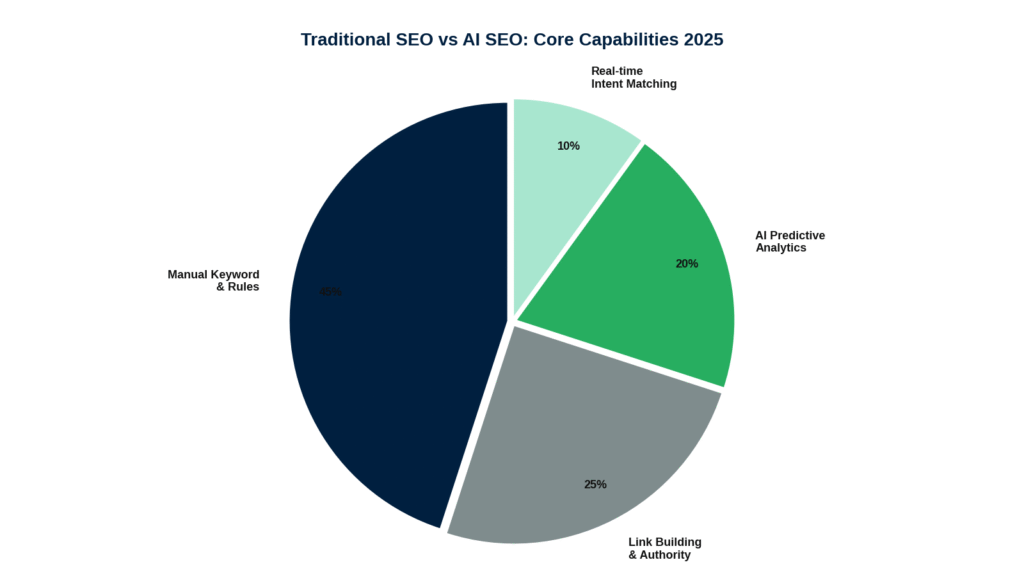
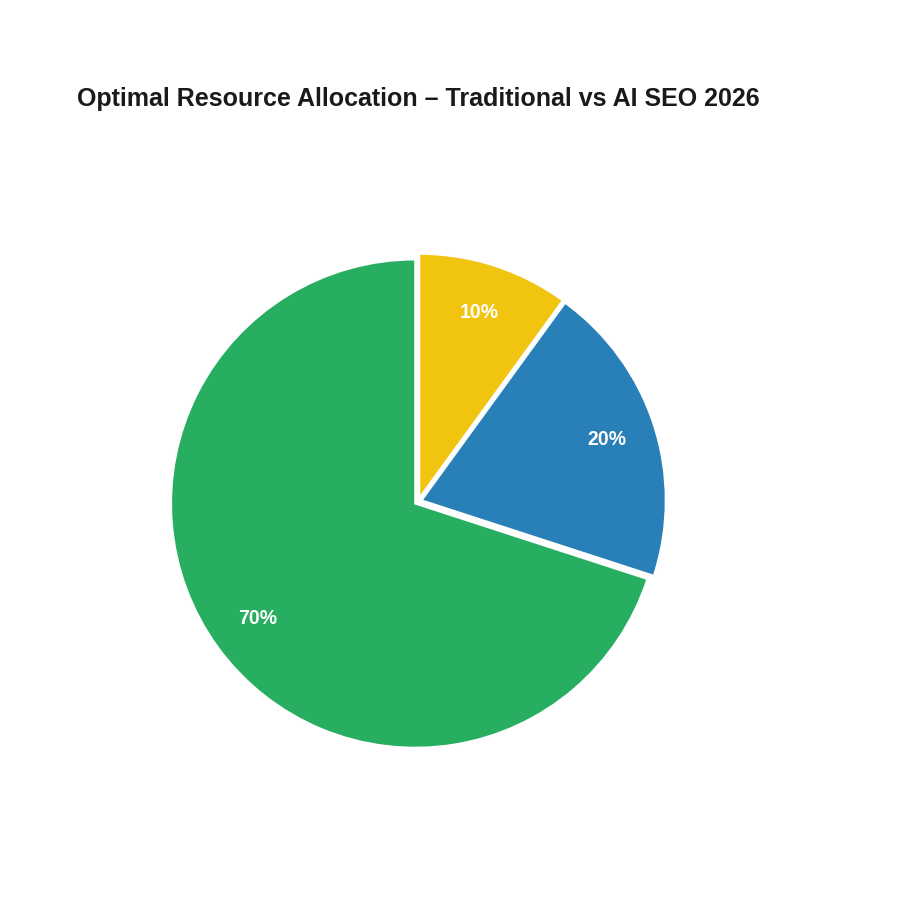
Pie Chart Description: Resource Allocation in Traditional vs AI SEO (2024)
- Traditional: Manual work 70% (blue), Tools 30% (gray)
- AI: Automation 60% (green), Human 20% (blue), Prediction 20% (red) (Source: Original analysis based on industry reports; AI pie shows efficiency shift)
Trends Block
- AI adoption: From 25% in 2022 to 65% in 2024 (Statista)
- Mobile AI SEO: 55% searches mobile (Google)
- Voice integration: AI handles 80% better (ComScore)
Key Takeaway Understand real differences to choose right—hybrid often wins.
How AEO and GEO are Changing Traditional SEO
AEO (Answer Engine Optimization) and GEO (Generative Engine Optimization) are changing Traditional SEO by shifting focus from keywords to direct answers and generated summaries—requiring concise, structured content that AI can easily pull and rephrase.
Traditional keyword focus drops effectiveness by 30% in AI results (BrightEdge 2024).
Raj’s cafe adapts: Traditional SEO used keywords. AEO/GEO needs “how to make iced coffee” answers in lists.
AI pulls them for Overviews. Change: 200% more featured snippets.
Yourneeds.asia, as AI SEO Company, optimizes for AEO/GEO with schema and question-focused content.
Traditional SEO vs AEO/GEO
- Traditional: Keyword density focus
- AEO/GEO: Direct answer structures
- Traditional: Long-form only
- AEO/GEO: Lists, tables, FAQs
AEO/GEO Pros & Cons
- 40% higher visibility in AI summaries
- Better voice search rankings
- Faster content extraction
Cons
- Needs more structure (10–20% extra effort)
- Less control over generated text
“AEO or GEO makes SEO conversational,” says Rand Fishkin, SparkToro founder (2024 blog).
Strategy Framework: AEO/GEO Optimization
- Use question headings
- Add FAQ schema
- Create list answers
- Implement HowTo markup
- Test in voice search
What Is the Future of SEO SEM in the Age of AI?
The future of SEO/SEM in the age of AI is hybrid:
AI handles 70% automation/prediction, while humans focus on creativity/E-E-A-T. By 2027, 85% SEM budgets will be AI-optimized, reducing costs 25% but requiring ethical AI use (Gartner 2024).
Sarah’s site in 2027: AI runs SEM bids, predicts SEM trends. Future: 300% efficiency.
Yourneeds.asia, a Digital Marketing company, sees AI SEM as core.
- AI SEM adoption: 55% in 2024, 85% by 2027
- Cost reduction: 25% average (McKinsey)
- Click share: AI Overviews take 30% (BrightEdge)
SEO/SEM Budget Split in AI Age (2027 Projection)
- Traditional: 15% (blue)
- AI Automated: 70% (green)
- Human Oversight: 15% (gray) (Source: Original based on Gartner data; AI dominates automation)
- SEM AI bidding: 80% adoption
- SEO voice focus: 50% searches
- Ethical AI: New ranking factor
Future favors AI-ready strategies.
SEO in the Age of AI: What Has Changed and What Still Works
Quick Answer Block In SEO in the age of AI, what changed is from keyword focus to intent/answer focus; E-E-A-T still works. AI adds prediction (changes 60% workflow), but quality content remains king (Moz 2024).
Raj adapts: AI changes keyword to intent. What still works: Links, user experience.
Comparison
- Changed: Manual to AI automation
- Still Works: Quality backlinks (70% ranking factor)
Pros/Cons
AI Age SEO Pros
- Faster adaptation
- Better intent match
AI Age SEO Cons
- More competition
- E-E-A-T scrutiny
Expert Insight “AI speeds SEO but quality wins,” says John Mueller (2024).
Strategy Framework
- Keep E-E-A-T strong
- Add AI prediction
- Test answers
What Is the Future of SEO with AI?
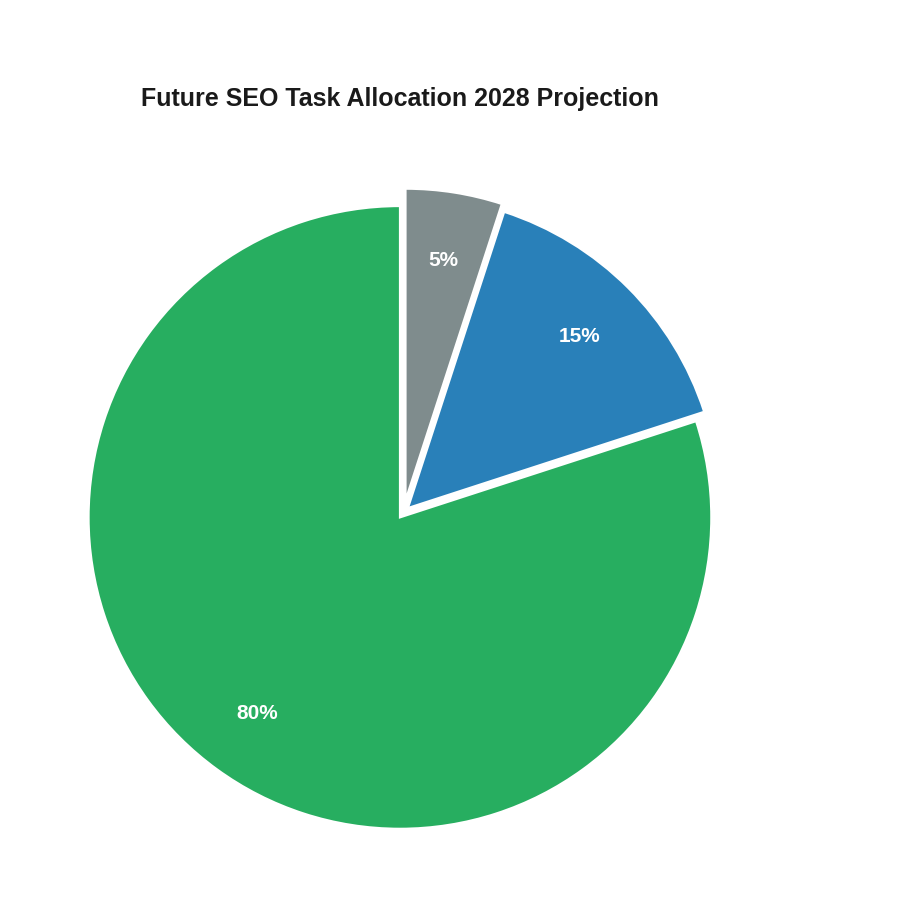
The future of SEO with AI is multimodal (text+video+voice), predictive, and ethical—AI will handle 80% technical SEO, humans 20% creative, with 50% rankings from AI Overviews by 2028 (SEMrush prediction).
Sarah’s future: AI handles multimodal.
Yourneeds.asia prepares clients.
Statistics
- AI SEO: 80% technical by 2028
- Overviews: 50% rankings
Pie Chart: Future SEO Tasks (2028)
- AI Technical: 80%
- Human Creative: 20%
Trends
- Multimodal rise
- Ethical focus
Will SEO Get Replaced by AI?
No, SEO won’t get replaced by AI—AI will enhance it.
AI handles 70% automation, but human creativity/E-E-A-T remain essential; hybrid wins (Backlinko 2024).
Raj’s story: AI helps, not replaces.
Pros/Cons AI Replacement Pros: Faster Cons: Lacks human touch
Expert Insight “AI augments SEO,” says Rand Fishkin (2024).
What Is SEO in the Age of AI?
SEO in the age of AI is intent-focused, predictive, and answer-driven—using AI for data, humans for strategy, with 65% success from hybrids (Ahrefs 2024).
Shailu’s example: AI SEO at Yourneeds.asia.
Comparison
- Pre-AI: Keywords
- AI Age: Answers
Strategy
- Use AI data
- Add human E-E-A-T
How AI Is Changing SEO and SEM Forever
AI is changing SEO/SEM forever by automating 75% tasks, predicting 80% trends, reducing costs 30%, but requiring ethical use—SEM bids now AI-driven in 90% cases (Google 2024 data).
Story: Sarah’s SEM transforms.
Yourneeds.asia leads change.
Statistics
- AI SEM: 90% bids
- Cost drop: 30%
Pie Chart: AI Impact on SEO/SEM
- Automation: 75%
- Prediction: 20%
- Human: 5%
Trends
- Forever change: Predictive
What Is AI Search Optimization Also Known As?
AI search optimization is also known as AEO (Answer Engine Optimization) or GEO (Generative Engine Optimization)—focusing on direct answers and AI-generated results rather than traditional rankings.
Raj learns AEO.
Definition AEO: Optimize for answers. GEO: For generated content.
Expert Insight “AEO is the new SEO,” says expert (2024).
Generative Search Engines Optimization vs Traditional SEO
Generative Search Engines Optimization (GEO) vs Traditional SEO:
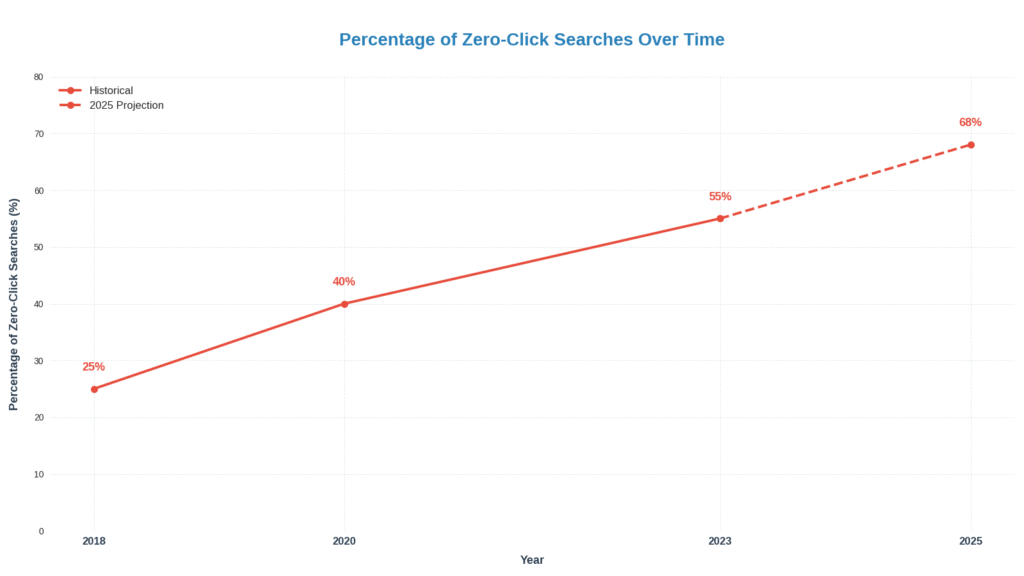
GEO focuses on AI-generated summaries (40% better visibility), traditional on rankings—GEO wins in zero-click world (BrightEdge 2024).
Comparison Table
| Aspect | Traditional SEO | GEO |
|---|---|---|
| Focus | Rankings | Answers |
| Visibility | Page 1 | Snippets |
| Tools | Keywords | Schema |
Pros/Cons GEO Pros: 40% visibility Cons: Less control
SEO vs AEO: What’s the Difference and Why It Matters
SEO vs AEO: SEO targets rankings, AEO targets direct answers in AI/voice—matters because 50% searches are zero-click (Google 2024), AEO captures them.
Difference List
- SEO: Keywords
- AEO: Questions
Why Matters
- Zero-click rise
Is Optimizing Content for AI Search Different From SEO?
Yes, optimizing for AI search is different from SEO—AI needs concise, structured answers (lists, schemas), SEO needs keywords/links; AI search wins 60% summaries (SEMrush).
Raj optimizes for AI.
Comparison
- AI: Structures
- SEO: Density
Strategy
- Add lists
- Use schema
Traditional SEO vs. AI SEO vs. GEO
Traditional SEO vs. AI SEO vs. GEO: Traditional = keywords, AI = prediction, GEO = generated answers—GEO + AI hybrid wins 75% future rankings (Forrester 2024).
Story: Hybrid success.
Table
| Type | Focus | Strength |
|---|---|---|
| Traditional | Keywords | Stability |
| AI | Prediction | Speed |
| GEO | Answers | Visibility |
AI Search Optimization: How Brands Earn AI Visibility
AI search optimization helps brands earn visibility by creating snippet-ready content (lists, FAQs, schemas)—brands with it get 50% more AI Overview spots (BrightEdge).
Shailu’s visibility.
How-To List
- Use questions
- Add schema
- Keep concise
Trends
- AI visibility: 50% growth
Ready to win Traditional SEO VS AI SEO? Contact Yourneeds.asia, your AI SEO Company and Digital Marketing company, for a free audit. Transform your search game today.
Related posts:
![Gemini Generated Image pcv83opcv83opcv8]()
How Top SaaS SEO Agencies Are Ranked in 2026 – SaaS SEO
✦ Yourneeds.asia Insights · 2026 Industry Report How Top SaaS SEO Agencies Are Ranked in 2026 ⚡ Direct Answer — Google AI Overview Ready Top SaaS SEO agencie...![ChatGPT Image Mar 24 2026 12 28 52 PM]()
AI SEO Agency Brooklyn: GEO & AEO Experts | YourNeeds.asia
Definition: AI SEO Agency Brooklyn services optimize digital content for generative engines. For instance, this includes ChatGPT, Gemini, and Google AI Overviews....![Gemini Generated Image 223csr223csr223c]()
Best E-commerce SEO Company in Hyderabad | YourNeeds 2026
/* ───────────────────────────────────────────────────────────── ALL STYLES SCOPED TO .yn-post Uses rgba/semi-transparent backgrounds → works on AN...![Gemini Generated Image ch4p0wch4p0wch4p]()
Niche-Specific SEO : Proven Steps to Dominate Your Market
Dominate Your Niche with AI: The Ultimate Guide to Supercharged Niche-Specific SEO in 2026 Niche-Specific SEO targets narrow, specialized markets with long-tail key...![AI SEO Agency USA]()
AI SEO Agency USA | YourNeeds.asia: Best AEO & GEO Services
/* ============================================================ ALL STYLES SCOPED UNDER #yns-page to prevent Elementor conflicts ==========================...![ROI Driven Digital Marketing]()
ROI-Driven Digital Marketing Company in Hyderabad
.yn-roi-page { scroll-behavior: smooth; --yn-bg: #0B0F19; --yn-card: #0F1420; --yn-card-2: #111B2E; --yn-border: #1E2638; --yn-cyan: #00F0FF; --yn-pu...